
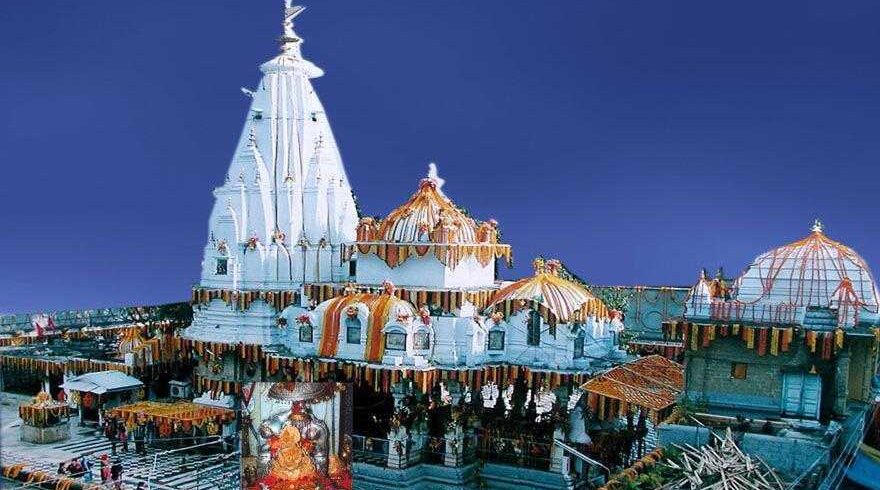
Himachal Pradesh is a state in northern India that is known for its scenic beauty, rich culture, and spiritual heritage. It is also home to some of the most revered Shakti Peeth In Himachal Pradesh, which are holy shrines dedicated to the goddess Shakti or Sati, the first wife of Lord Shiva. According to Hindu mythology, there are 108 Shakti Peeths in total, where the body parts of Sati fell after she immolated herself in her father’s sacrificial fire. Out of these, four are located in Himachal Pradesh, namely Jwalaji, Chintpurni Devi, Naina Devi, and Brajeshwari Devi. These temples are visited by millions of devotees every year who seek the blessings of the goddess and experience her divine power.
Story Behind Shakti Peethas
The story behind Shakti Peeths is related to the legend of Sati and Shiva. Sati was the wife of Shiva and the daughter of Daksha, who disapproved of their marriage. When Daksha insulted Shiva, Sati sacrificed herself by fire.
Shiva was enraged and carried Sati’s body around the universe. To stop his rampage, Vishnu cut Sati’s body into 51 pieces, which fell on earth and became Shakti Peeths, the holy places of the Goddess.
5 Shakti Peeth in Himachal Pradesh
The five Shakti Peeths in Himachal Pradesh are Jwalaji, Chintpurni Devi, Naina Devi, Brajeshwari Devi, and Chamunda Devi each having a unique history, legend, and significance. These temples are visited by millions of pilgrims every year, who come to worship the goddess and experience her miracles.
Jwalaji Temple:
Jwalaji Temple is a famous Shakti Peeth in Himachal Pradesh, where the tongue of Sati fell. It is also known as Jwalamukhi or Flaming Goddess, as it has a natural flame that burns without any fuel. The flame is worshipped as the goddess Jawalji, who has nine forms. The temple was built by Raja Bhumi Chand Katoch and later renovated by Maharaja Ranjit Singh. The temple is visited by lakhs of devotees during Navratri and other festivals.
Chintpurni Temple:
Chintpurni Temple is a prominent Shakti Peeth in Himachal Pradesh, where the feet of Sati fell. It is dedicated to Chintpurni Devi or Chhinnamastika Devi, who is a headless goddess holding her severed head and drinking her blood. The temple has a pindi or stone idol of the goddess without a head, who is worshipped as the one who fulfills all worries or desires. The temple was established by Pandit Mai Das in the 16th century and is visited by thousands of devotees every day.
Brajeshwari Temple:
Bajreshwari Temple is a sacred shrine of the goddess Shakti, where the left breast of Sati fell. It is located in the Kangra district of Himachal Pradesh and is also known as Vajreshwari Devi or Kangra Devi. The temple has a pindi or stone idol of the goddess with a silver umbrella over it, which is adorned with flowers and jewelry. The temple was built by Raja Dhruv Dev in the 10th century AD and later rebuilt by various rulers. The temple is visited by lakhs of pilgrims every year, especially during the Navratri festival.
Chamunda Devi Temple:
Chamunda Devi is a sacred shrine of the goddess Shakti, where the ears of Sati fell. It is located in the Kangra district of Himachal Pradesh, on the bank of the Ban Ganga River. The temple is dedicated to Chamunda Devi, who is a form of Durga or Shakti. Chamunda Devi is also known as the goddess of war and epidemics, who killed the demons, Chanda and Munda. The temple has a pindi or stone idol of the goddess with a trident and a skull in her hands.
Naina Devi Temple:
Located in the Bilaspur district of Himachal Pradesh, India, the Naina Devi Temple is a revered shrine dedicated to the goddess Naina Devi, an incarnation of Shakti. According to Hindu mythology, this temple is one of the 51 Shakti Peethas, where the left eye of Sati, the consort of Lord Shiva, is believed to have fallen.
- Location and Significance: The temple is situated on a hilltop, overlooking the surrounding landscape. It is a significant pilgrimage site, attracting devotees from all over the world. The temple’s location is steeped in mythological significance, as it is believed to be the site where the goddess Naina Devi grants her devotees a clear vision and insight into their lives.
- Temple Architecture and Idol: The temple is known for its beautiful architecture, with a pindi or stone idol of the goddess Naina Devi at its center. The idol features two eyes, which are covered with a silver mask and adorned with flowers and jewelry. This unique feature is a testament to the temple’s rich history and cultural significance.
- Dedication and Significance: The Naina Devi Temple is dedicated to the goddess Naina Devi, who is revered for her power to grant her devotees a clear vision and insight. The temple is a popular destination for those seeking spiritual enlightenment, healing, and guidance. It is also a significant cultural and historical landmark, attracting tourists and pilgrims alike.
